
It can often seem like you are the only one struggling with getting your dog to walk nicely beside you on leash when you are out and about. Everyone else seems to have it figured out, their dogs walking so calmly beside them. However, a huge number of doggy families struggle with walking politely on leash. Some dogs pull non-stop, others get over-excited when they see other dogs or people, some don't know you exist on the other end of the leash, others stick the nose on the ground refusing to move on. In this post, we talk about what polite leash walking is, what tools we need and don't need to achieve it, how to practice it, and how to progress with it.
What is Polite Leash Walking?
Just like with everything else we teach our dogs, it is very important to have a good idea of exactly what it is you are going to teach. Polite leash walking is not just about not pulling on leash but specifically about what your dog should do instead in each different context and, importantly, when do they get time to just be a dog?
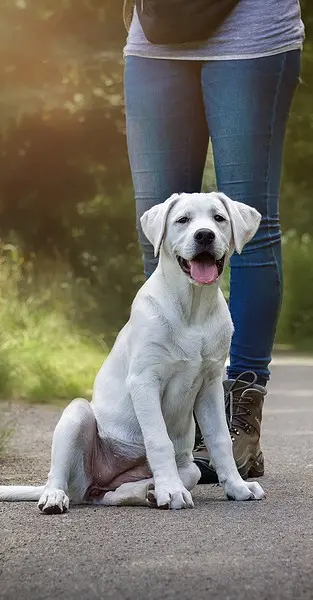
Your dog should be able to walk calmly by your side when needed, and be able to sniff and explore the world around them without pulling when suitable. If there is something they want to explore, they should be able to ask nicely for it, but also should be listened to and accommodated when safe. A walk is a joint adventure rather than pure exercise. The mental stimulation of engaging with the world around them is vital for their well-being and to prevent issues cropping up in other areas of life.
Tools Needed
Essential tools for your success.
Comfortable leash
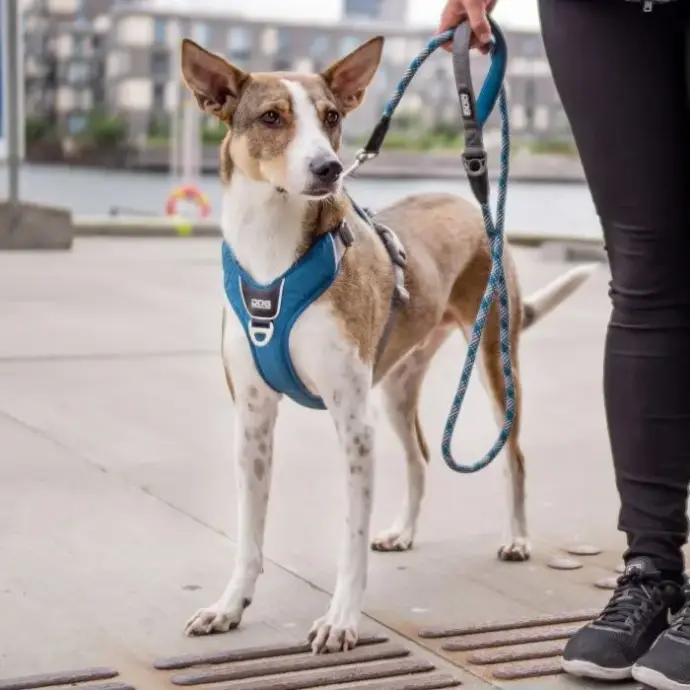
The leash you use should be comfortable on your hands. No flat leashes, as these can cut your hands. Ideally, look at a padded training leash, which allows you to change length, suitable for your surroundings.
Suitable harness
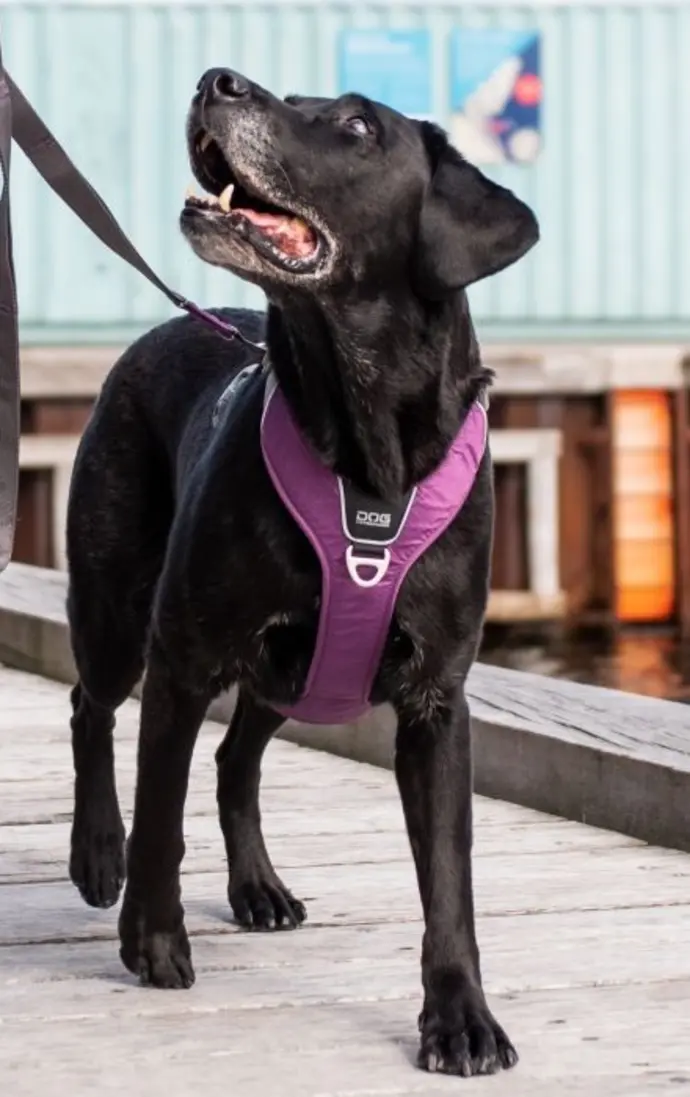
Not all harnesses are created equal, and not all harnesses are suitable for leash walking. We are not looking for a harness to stop your dog pulling. They don't work in the majority of cases and are not a suitable replacement for training. We are looking for a harness to spread the load, reduce arousal levels, and help your dog choose to engage with you.
Treats and other rewards
It doesn't always have to be treats. You can use toys or other things your dog likes, such as sniffs, saying hello to other dogs or people, watching birds, etc. We need to have something that your dog enjoys and use it to reward what we like.
Time
While teaching polite leash walking isn't technically difficult, it does require consistency, patience and a recognition of how your dog learns.
Tools Not To Use
These will hinder more than help
Retractable leash
The idea of a retractable leash is great, being able to allow your dog space to sniff, and also being able to keep the leash tidy when they are near by. However, the very method they use to work is what makes them terrible for teaching polite leash walking. There is always tension on the leash to allow it to retract. Your dog walks and is able to continue on their journey while the leash is under tension. This helps reinforce that pulling on leash works and gets them where they want.
No-pull harnesses
Using no-pull harnesses is using a punishment-based approach to learning. Depending on the learning style of your dog, this can set them up to learn to ignore you when out and about, or worse cause them to incorrectly learn that things around them cause the pain instead of their pulling.
Head collars
Similarly to no-pull harnesses, these work on punishment. In addition to that, there is the risk of causing thrashing, or even whiplash type injuries, if your dog suddenly launch forwards.
What is the fastest way to teach this?
As with all other aspects of properly training a dog, there are no shortcuts. There is no tool that will magically work to get your dog to walk nicely in all situations, and no lifehack to get them there faster.
The fastest way to teach your dog to walk nicely on leash is to:
- Slow down
- Understand your dog
- Understand why they are currently not walking nicely on leash
- Teach them how to get this right - make a plan
- And proof it (build up in every different context)
What next?
Over the coming weeks we will be adding some more exercises and games to start to bolster your leash walking practice at home. So check back often.
Also we have our Leash Walking Masterclass course to really get your teeth into the topic and work on recall in the distractions of the park around lots of other dogs.
Watch out for
Some things you need to sort out before you launch into training leash walking itself.
Barking & lunging at dogs
Whether your dog is barking and lunging out of some big emotions, where they do not want the other dogs to come closer, or if they are just over excited at seeing another dog, this needs to be worked on before we can ask them to even think about walking nicely on leash.
If this sounds like your dog, consider some one-to-one work or get in touch with one of our trainers or behaviourists to get started on this.
Putting the brakes on
There are lots of reasons why dogs refuse to walk. In some cases, there may be underlying pain or discomfort. In others, they may have learned that it's the only way to get to stop and sniff something interesting. Or maybe there is simply something scary ahead.
It is worth having a quick chat with your vet around this stopping repeatedly. If you are not sure what you are looking for, talk to a trainer who will be better able to spot potential issues.
You don't exist when outside
Dogs can learn very quickly that paying attention to us outside is a bad thing that stops them getting to do the things they want to, such as sniff something, chase something or eat something. We need to work together rather than against each other.
It is very important to not try to distract your dog in such situations, as they catch on very quickly. Instead, during quiet times keep them engaged by giving free treats or play as they walk by or near.
Lying down on approach
Some big dogs learn that they are more likely to get other dogs to say hi to them if they lie down. In other cases, it can be an expression of a built-in pattern for some dogs to 'stalk'. Other dogs can find this unnerving, because they are being stared at and stalked, often leading to a negative interaction.
Because there are different reasons for lying down on approach, it is best to grab a video of your dog doing this if they are going to anyway (don't try to set it up!). Send this to your trainer for review and they can see how best to help from there.
Not taking treats
Some dogs are simply not foodies. But here we are talking about your dog not engaging even with the most scrumptious treats or their favourite toy. Dogs can quickly learn that these things are often used as distractions and so stop listening to them. Other times, it can be a sign that their arousal levels have gotten too high to do any successful work.
We need to look at engaging your dog with toys, praise or pets if those are what they may want. Remember if this is the case, don't ask them to do anything, just give for free until they are happy to engage again.
Hyper when outside
The outside world is very exciting, especially when you add smells into the mix. Some dogs don't get a lot of opportunities to say hi to other dogs and practice their social skills. They come in too excited, there is a bad reaction from the other dog, and suddenly we are less likely to let them say hi again. This builds frustration and a hyper dog.
Look into some safe open spaces to just let your dog be a dog. Private dog parks like Woofland and others are particularly good for this, along with joining canine social groups. Reduce the novelty of being outdoors.
Getting started
How to set you and your dog up for success
Address other issues first
See if your dog shows any of the signs to watch out for in the previous section. Look to address those issues before the walking itself. For example, what do you want your dog to do when they want to go sniff something? Focus on what they should learn to do instead of what not to do.
Make a plan
Identify what needs to be done and how to address each step. Remember to make each step easily accessible, and set your dog and yourself up for success. For example, don't start walking practice along the main road if your dog is scared of the loud trucks and trailers that go by. Stick to your plan but be ready to add in levels or layers as you go to help them succeed.
Make it achievable
Don't expect to practice for your whole walk, even if your dog starts with it working well. It is too much for both of you in the beginning. Instead, set them up for success by starting with small amounts of time before letting them enjoy what they like for a bit. Build up the duration of the practice and frequency as your dog succeeds.
Build it up at your dog's pace
Every dog works at their own pace, just like us. Make sure you are not trying to push on too quickly, and that each step of your plan is robust before moving on. Also keep in mind, we all have off days, including our dogs. Don't force it and don't be disheartened. It is okay to go backwards for a few days if needed.
Proof it
Make it work in every context. Start with easy setups, such as a quiet and boring patch of footpath that you may have gone over already. Ensure there are no other distractions, keep up a high rate of reward, make it easy to get right. Then change one thing at a time. Change locations but keep everything else the same. Next time, keep the same location but add more time to the practice. Gradually introduce distractions as each layer is reliable before moving on.
Ask for help
While leash walking is not technically difficult, spotting all the nuances of why it isn't working, how your dog learns, and how best to go about things can be tricky. It is difficult to see the whole picture when you are right in the middle of it. Don't be afraid to ask for help.
Step 1
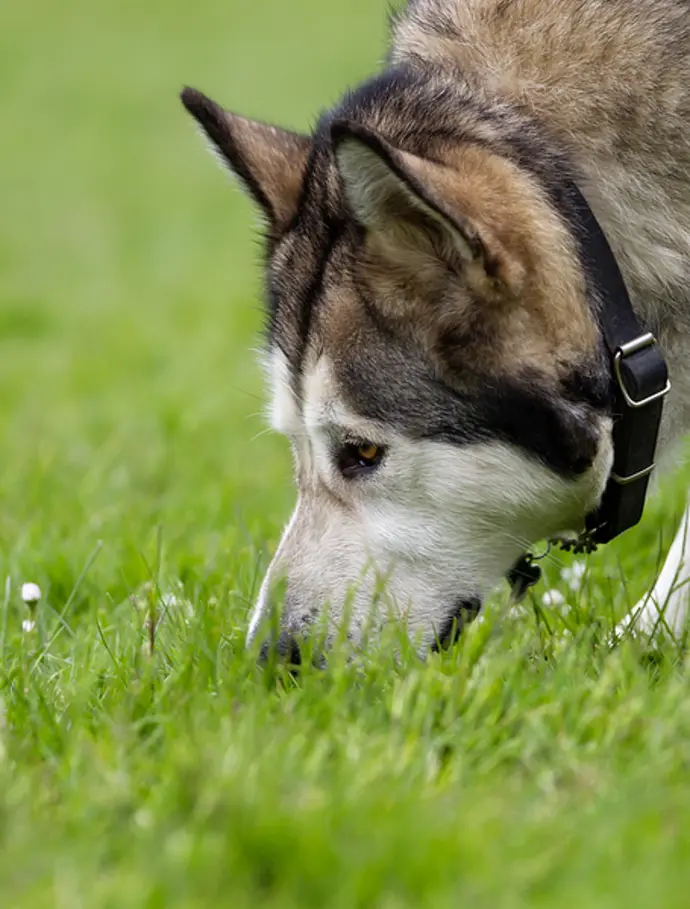
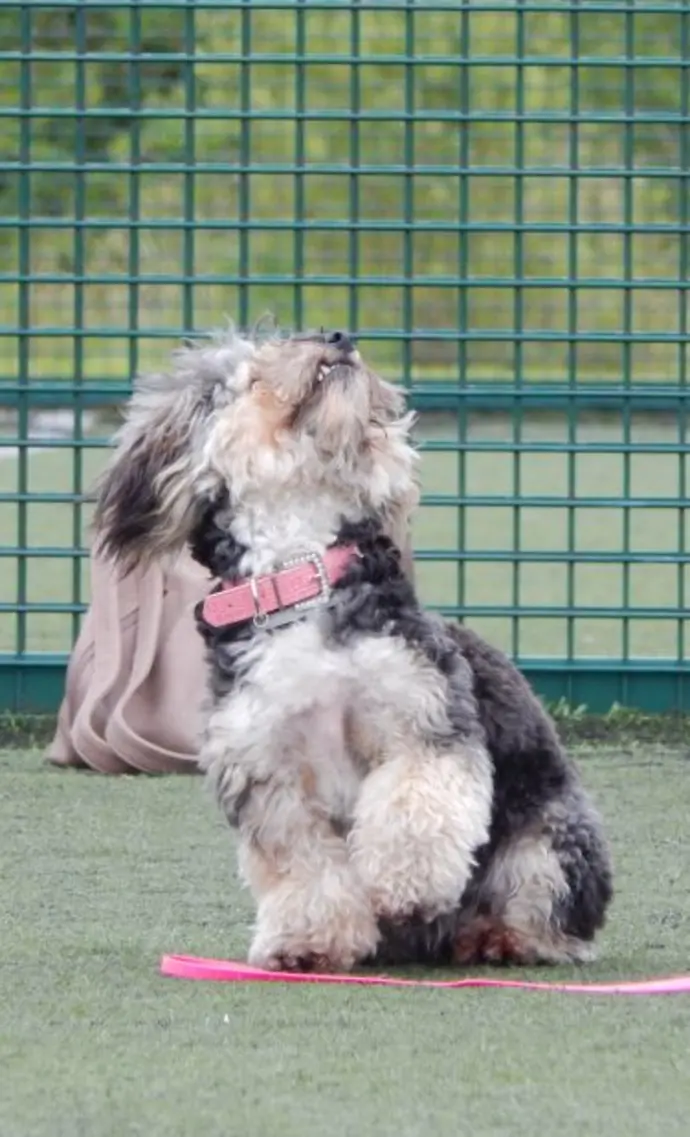
Start somewhere quiet and easy. Give your dog a few minutes to get all the sniffs in, engaging with them as they explore the environment.
When they are all done, say 'find it' and throw a treat beside you on the ground to find. When they look up for another, say 'yes' and drop another treat right beside you at your leg. Ideally, you want to hold the leash with the hand on the opposite side to the dog and keep your treats in your pocket on the same side as the dog, where you are dropping them.
Repeat for 3-10 treats. Stop if your dog is getting bored.
Step 2
Continue to do step 1 in different spots for at most two minutes at a time. When your dog is doing this easily in each place, you can then move onto this step.
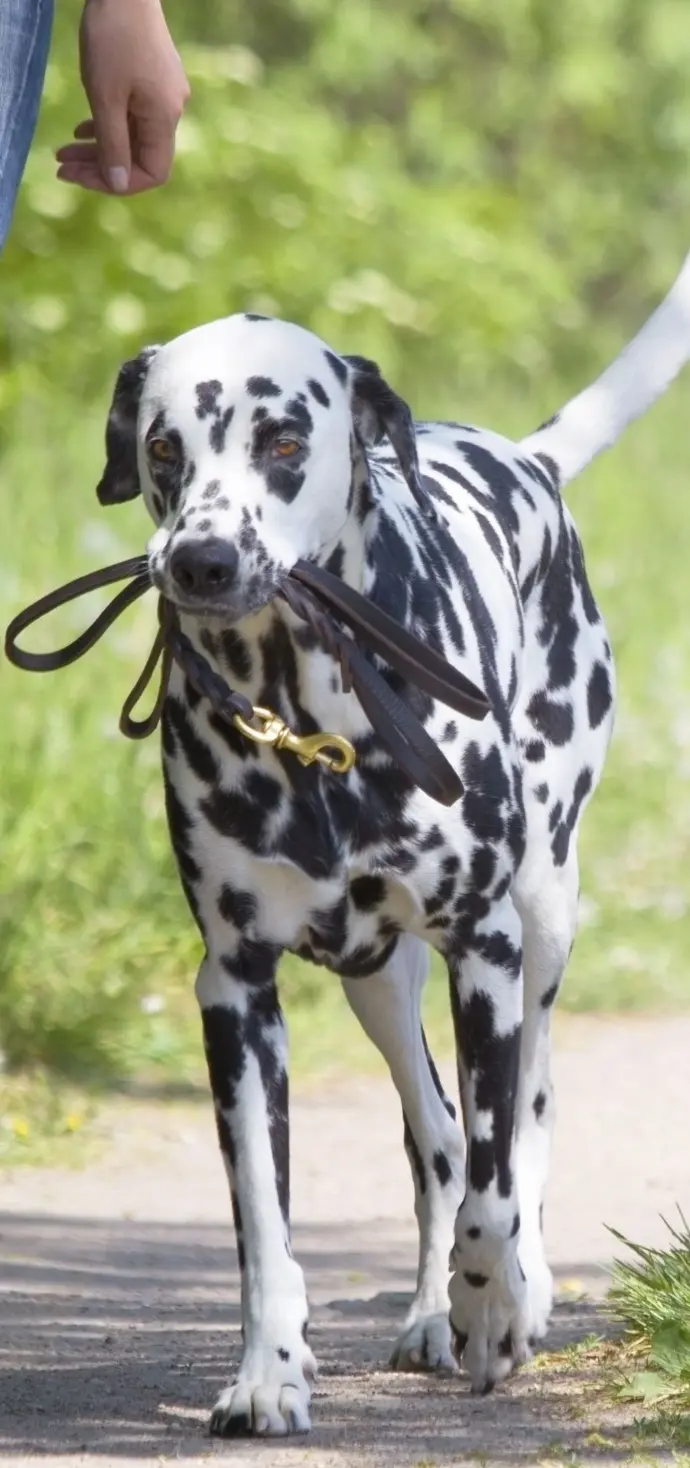
Repeat step 1 for two treats. After this, when your dog looks up for their next treat, say 'Let's go', take one step forward, and immediately drop the treat at your side as before. When your dog looks up again for the next treat, slightly change your direction and repeat.
Work on this until your dog is happily moving with you when you say 'Let's go' every time you say it and step forward. Remember to keep your leash loose — don't pull them along by the leash. If your dog doesn't move, pause with them a few moments and try again. If still nothing, take a break for the day and try again tomorrow. Go back to proofing step 1 if your dog doesn't succeed the next day either. Keep each practice to under two minutes each but repeat as often as you can on your walk.
Step 3
Once your dog is happily moving with you one step in each of the different spots you are practising in on your walks, you can start to add more distance before dropping that treat.
Don't be tempted to start walking down the road, and don't always make it harder when they succeed. Start with giving that treat every 2-6 steps, randomise it in that range. When that is reliable, move up to 3-10 steps.
In each moment, judge whether your dog is in the right frame of mind for the level of difficulty. If not, make it easier and build it up later. It is better to set yourself and your dog up for success than push too hard and cause discouragement.